Research

from forces that shape cosmic expansion to the birth of galaxies

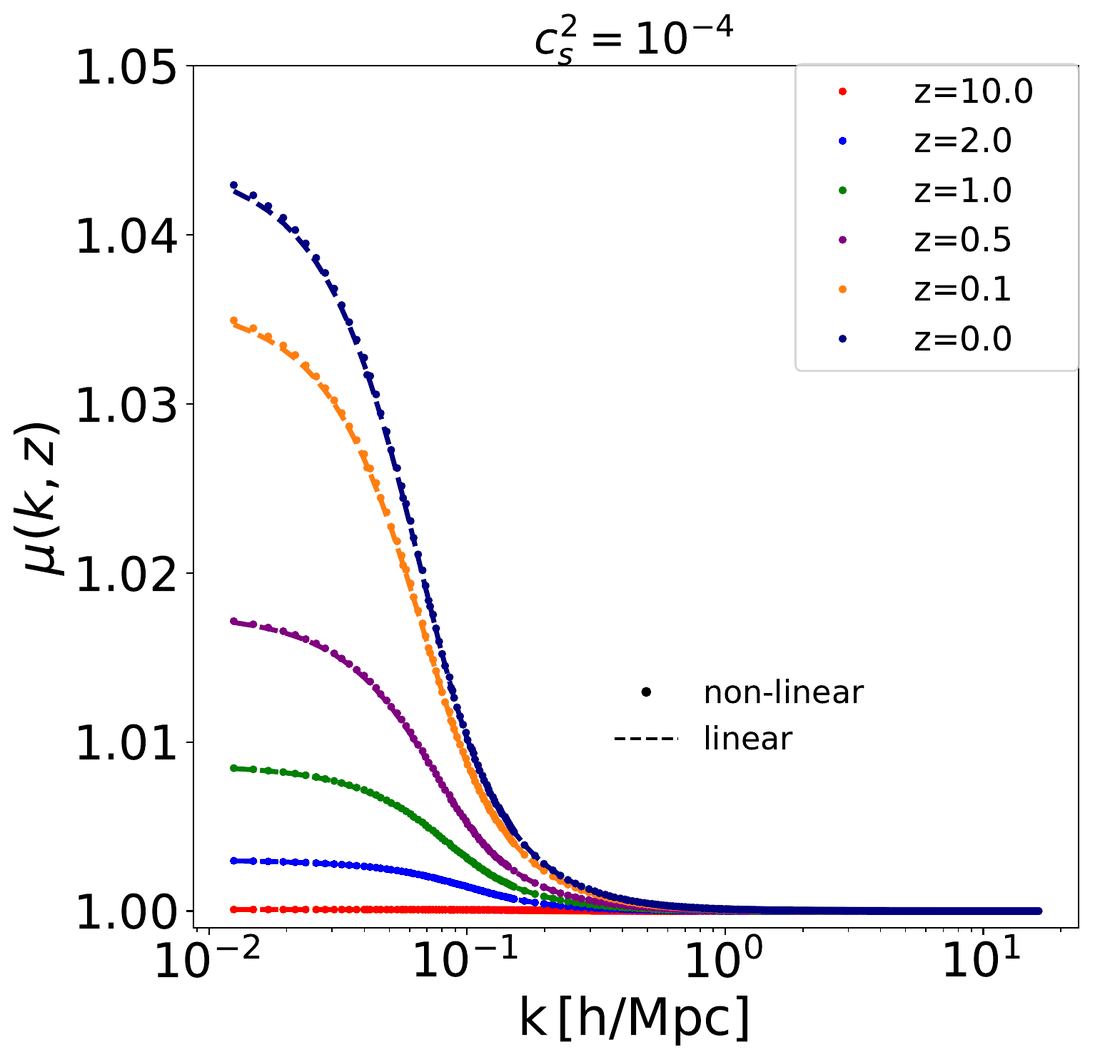
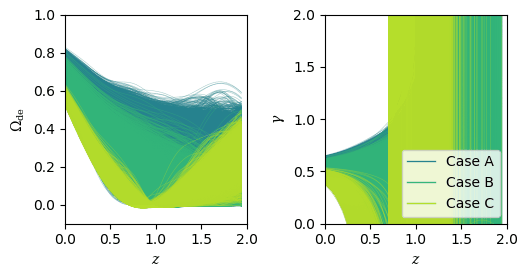
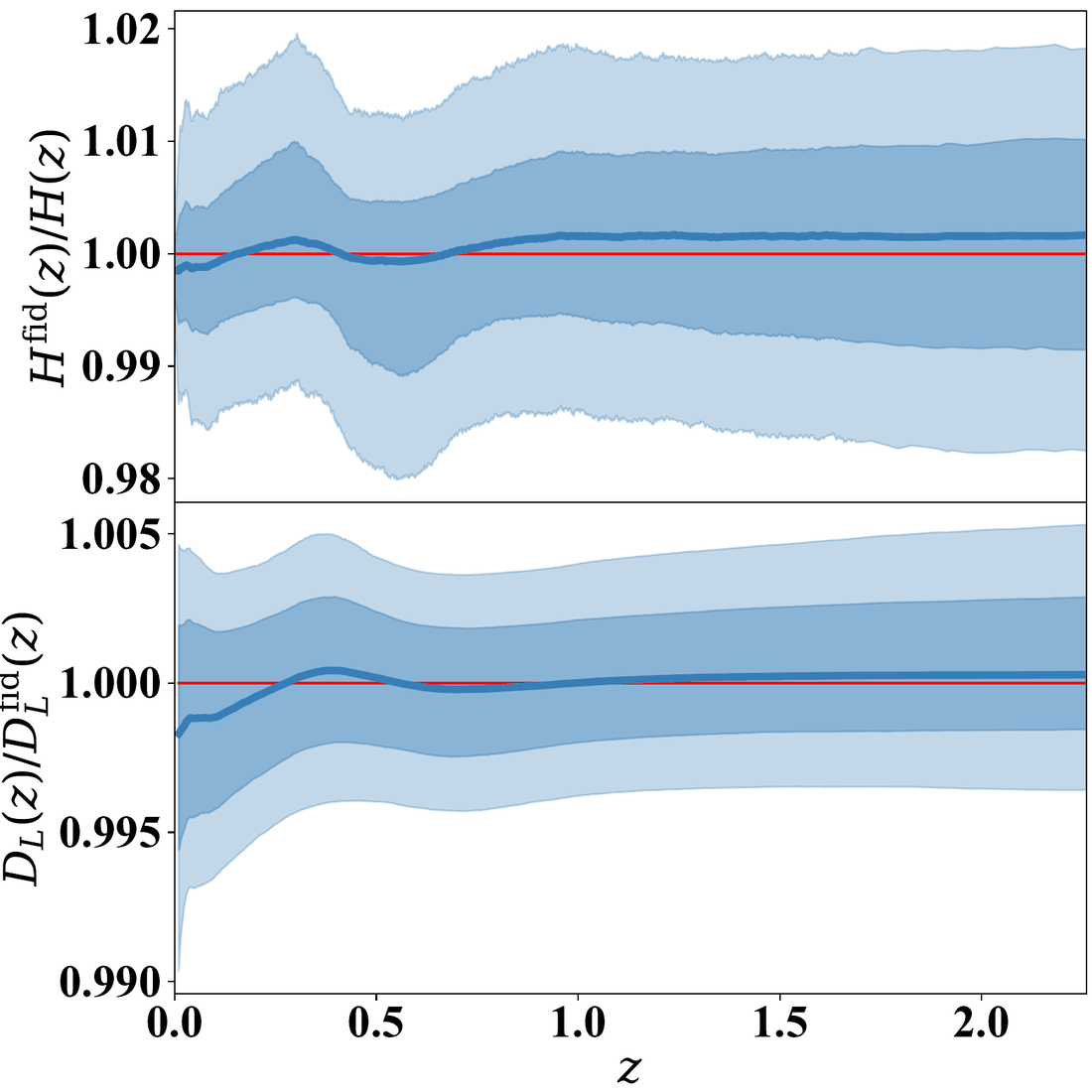
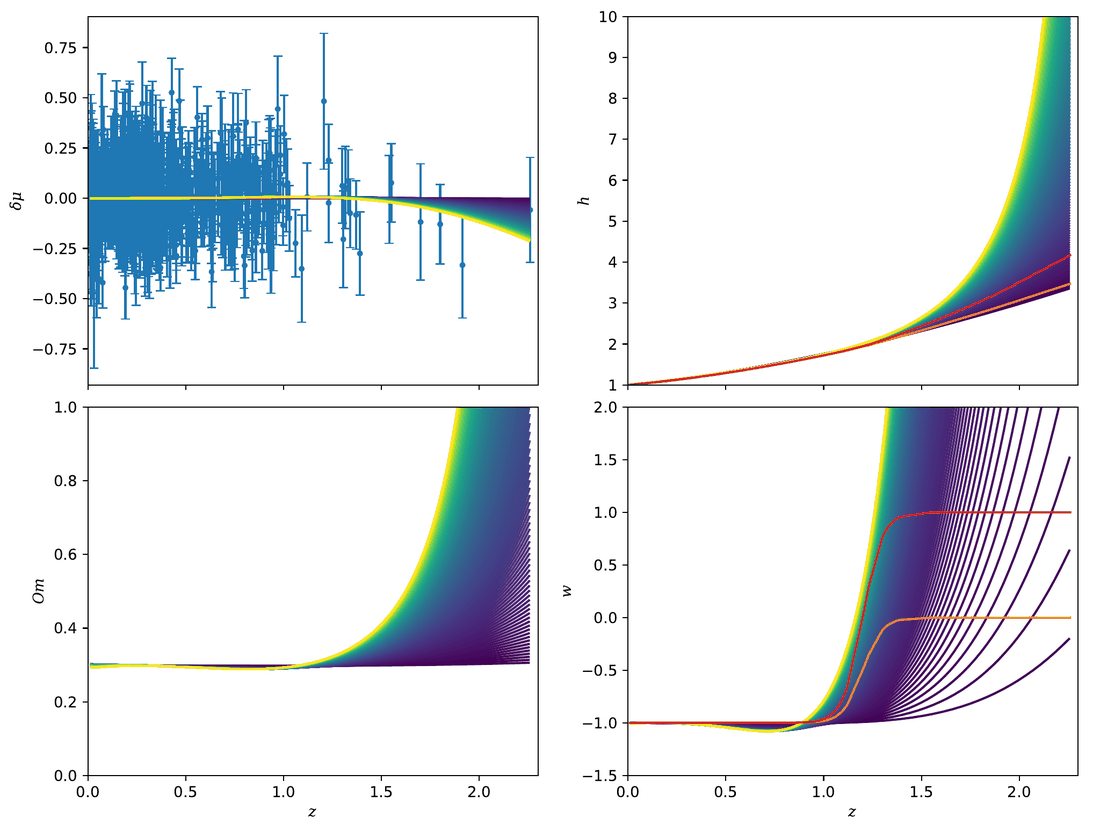
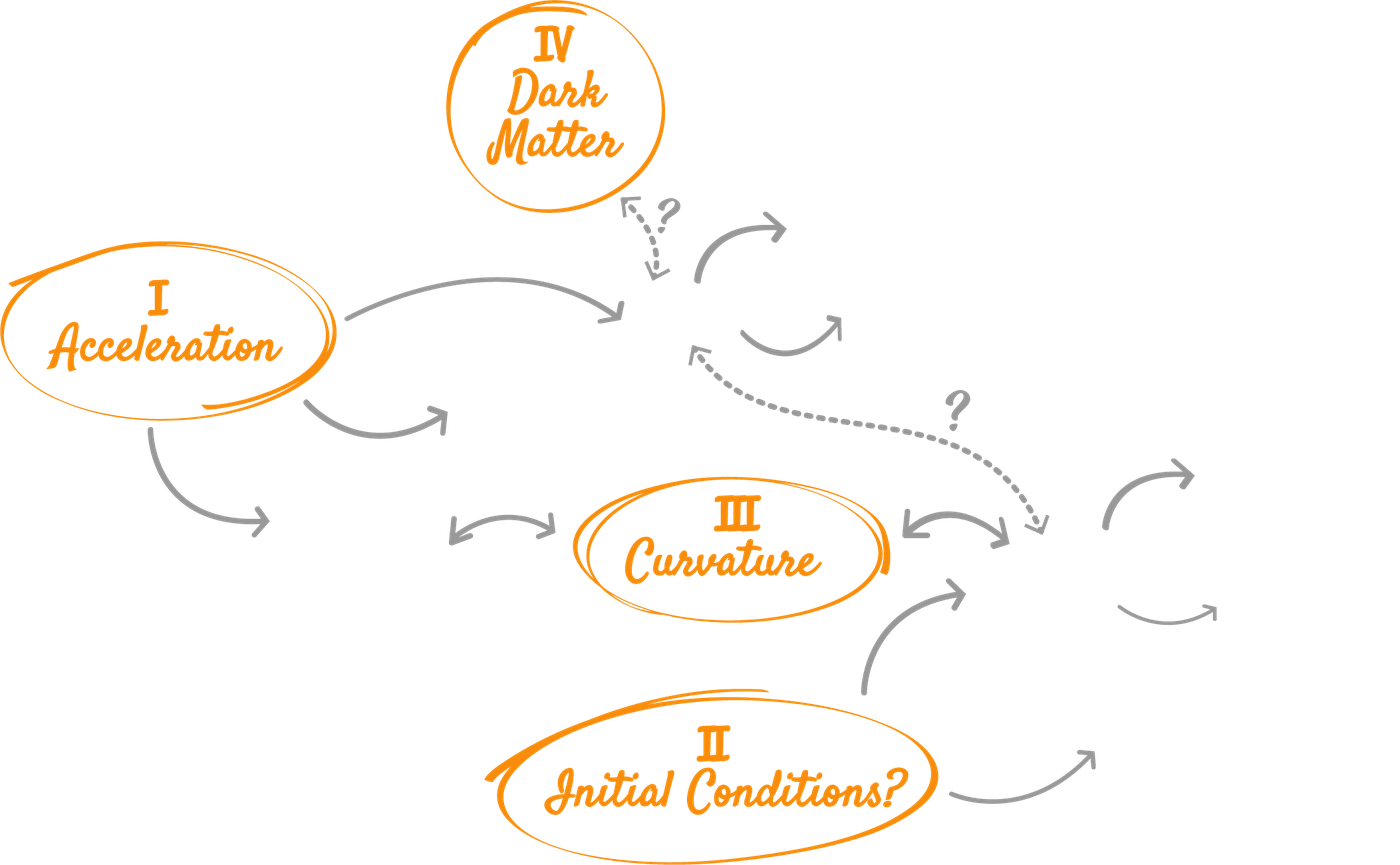
Diagram connecting the research areas: dark energy, modified gravity, inflation, large-scale structure and galaxy formation

The standard model of cosmology, ΛCDM, is usually tested by fitting it to data, which assumes the model is right and then measures its parameters. I take the opposite route: reconstruct the history of cosmic expansion and structure growth directly from observations, without assuming a model, and check whether ΛCDM is consistent with what we find. Alongside these tests, I use cosmological N-body simulations to understand how dark matter haloes and galaxies form within the large-scale structure.

  • Is the Universe homogeneous, isotropic and flat?
  • What drives the accelerated expansion of the Universe?
  • Is Einstein's General Relativity the correct description of gravity?
  • How do galaxies and their black holes grow within the cosmic web?

The methods behind this work (Gaussian processes, iterative smoothing, Bayesian and frequentist model selection, deconvolution, N-body simulations) are general tools for inferring functions from noisy, indirect data. The publication list below can be filtered by method.

Publications

Click one or more labels to show the papers on those topics.
* corresponding author · † student or junior researcher I supervised or co-supervised

12 papers: Key papers

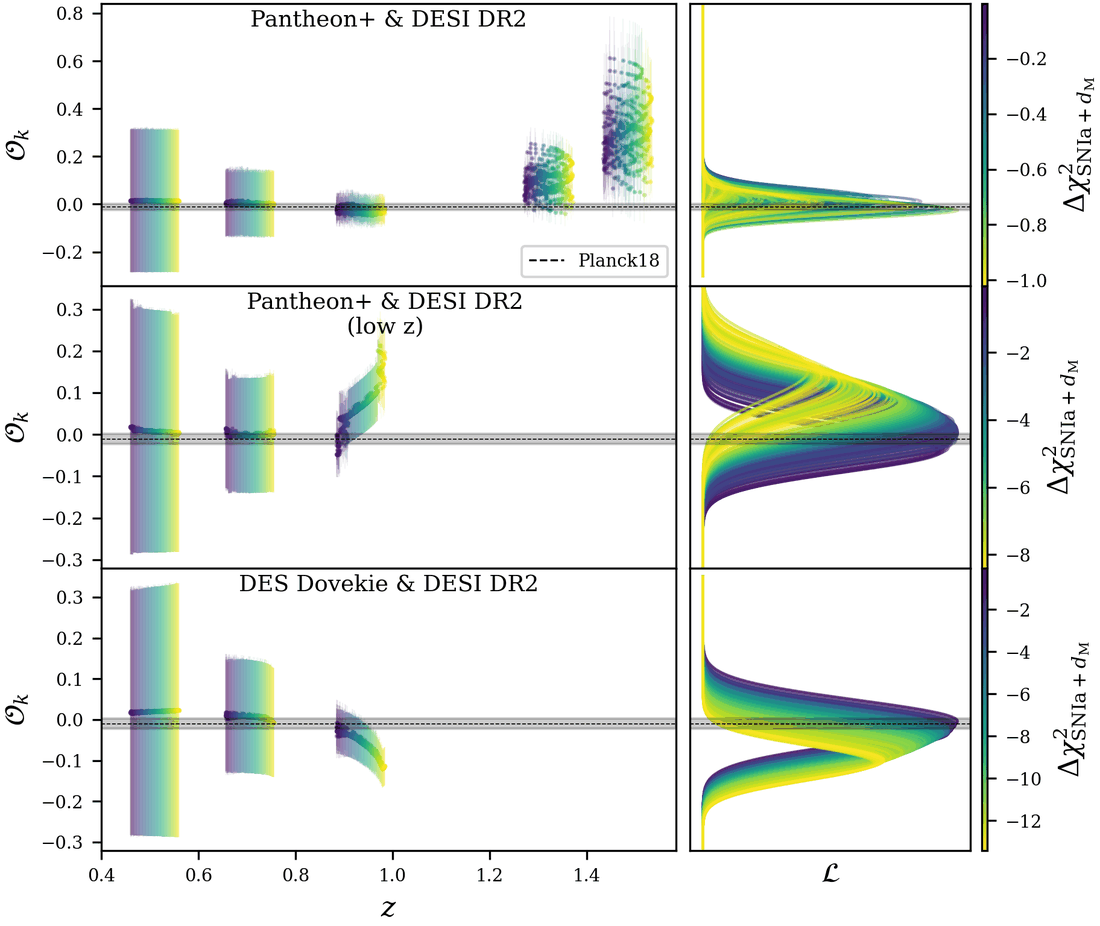
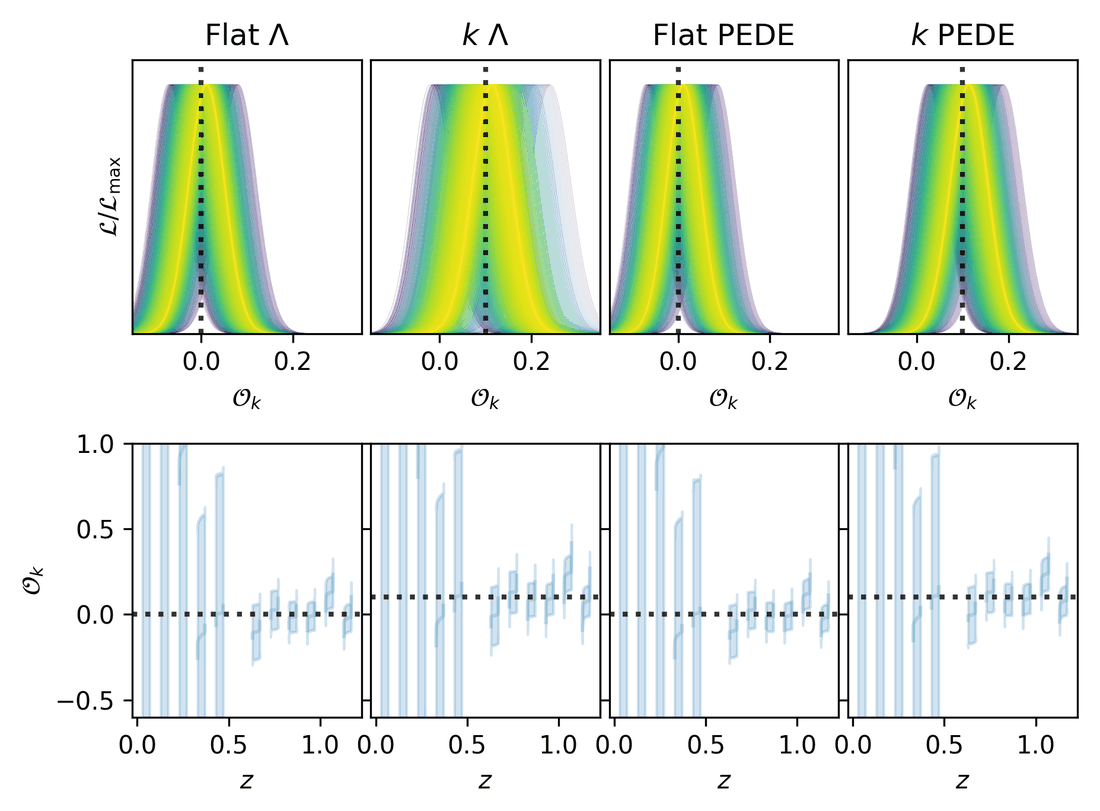
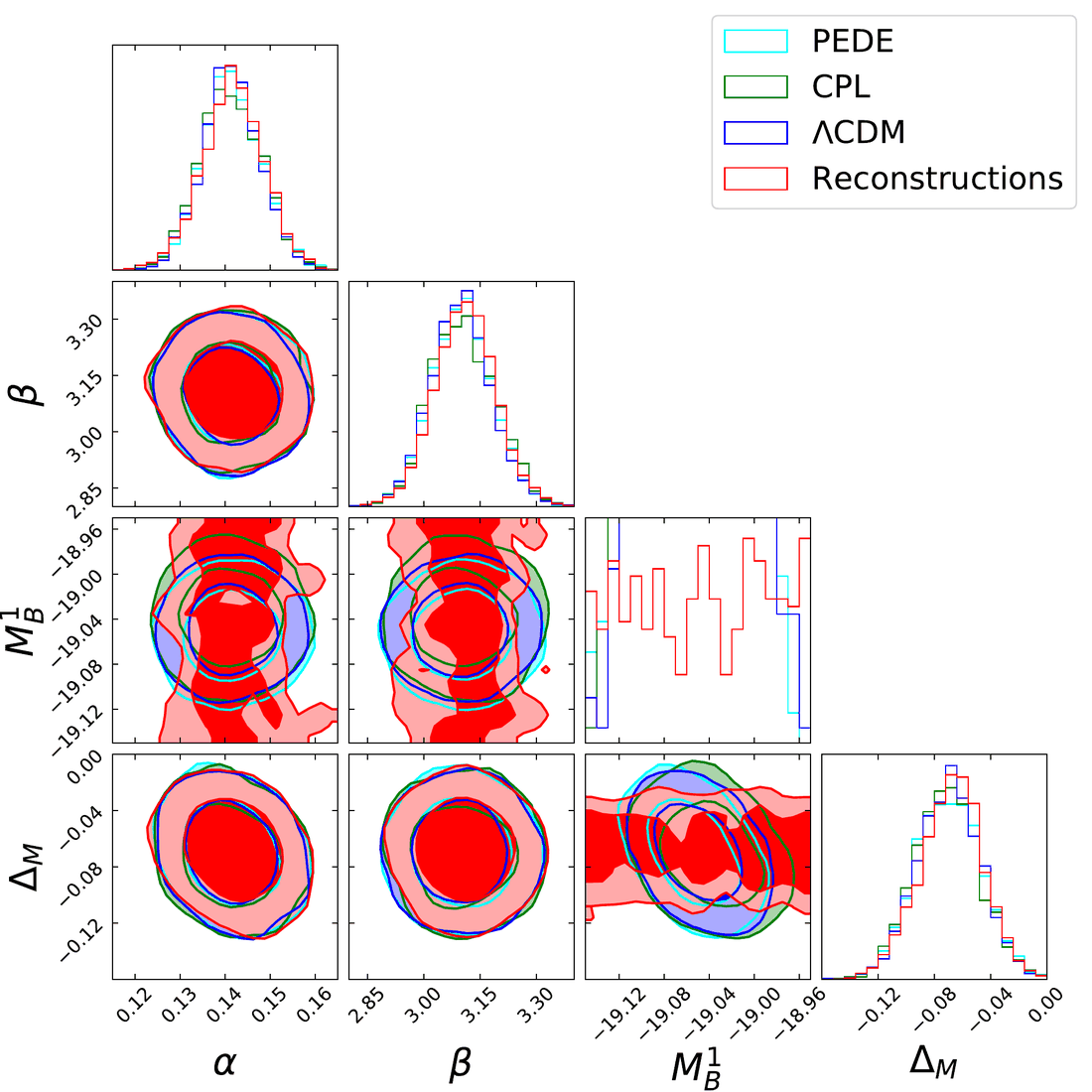
Ok(z) from supernova reconstructions combined with DESI DR2, for three data sets, colour-coded by Deltachi2; right: the resulting likelihoods.
Ok(z)\mathcal{O}_k(z) from supernova reconstructions combined with DESI DR2, for three data sets, colour-coded by Δχ2\Delta\chi^2; right: the resulting likelihoods.

Is the Universe flat? A test with DESI DR2

2026 · JCAP 08 (2026) 016

Model independent test of the FLRW metric and the curvature in light of DESI DR2

Millard, C.†, L'Huillier, B.*, Douspis, M.

We reconstruct distances and the Hubble rate from Pantheon+ and DES supernovae without assuming any dark energy model, and combine them with DESI DR2 baryon acoustic oscillations to test the FLRW metric and measure the spatial curvature. With Pantheon+ and DESI DR2 we find Ωk,0=0.045−0.081+0.045\Omega_{k,0} = 0.045^{+0.045}_{-0.081}, consistent with flatness and with Planck 2018.

DOI · arXiv:2601.20293

Key papersCurvature & FLRWType Ia supernovaeBAOIterative smoothingWith my students

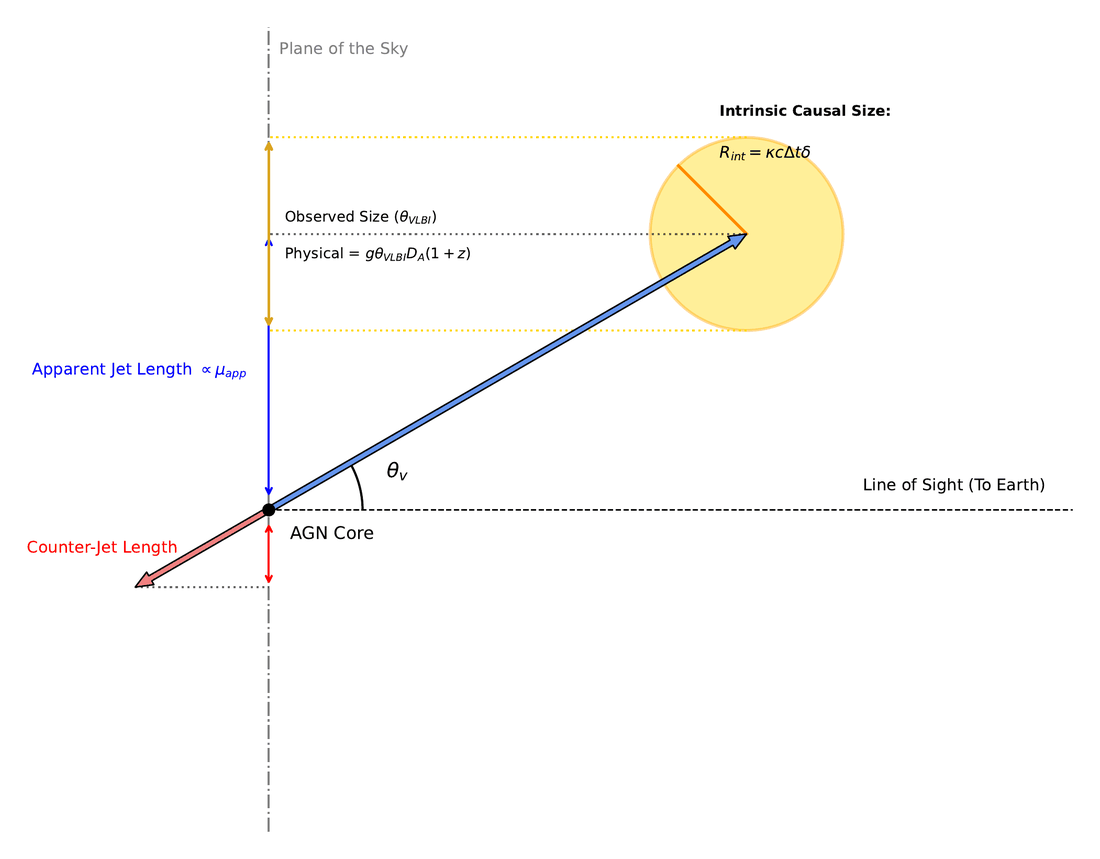
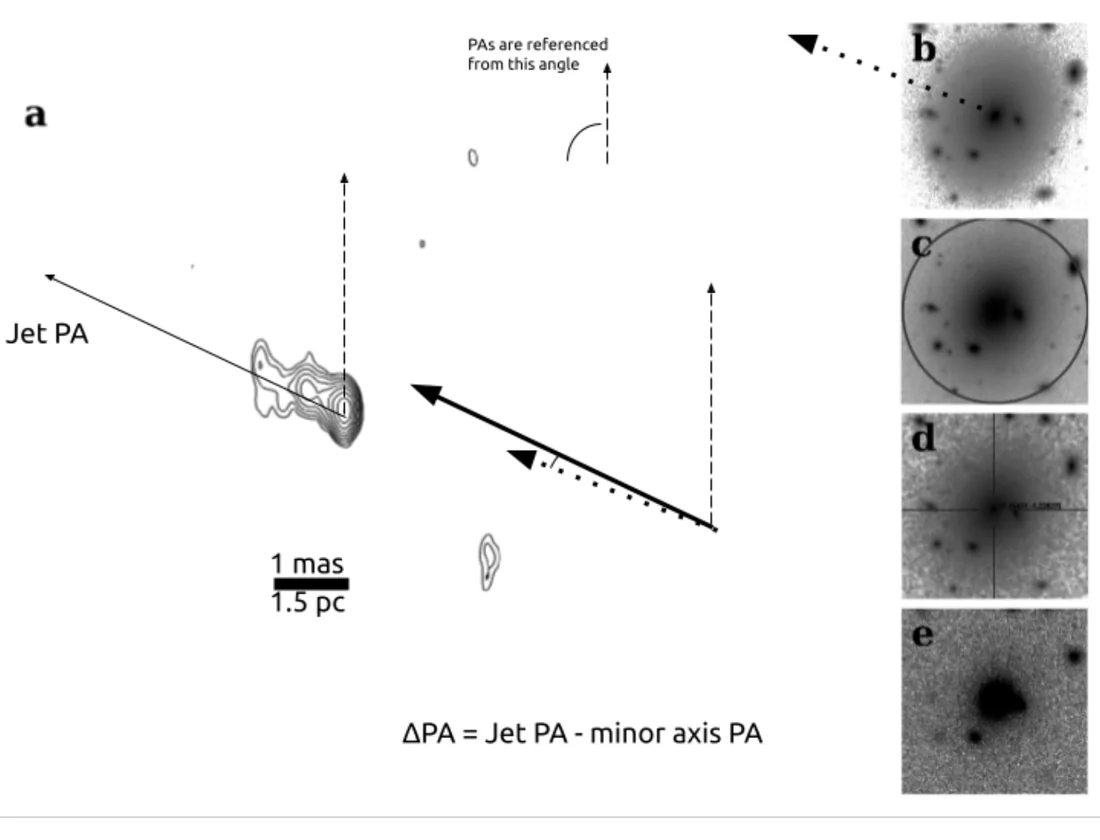
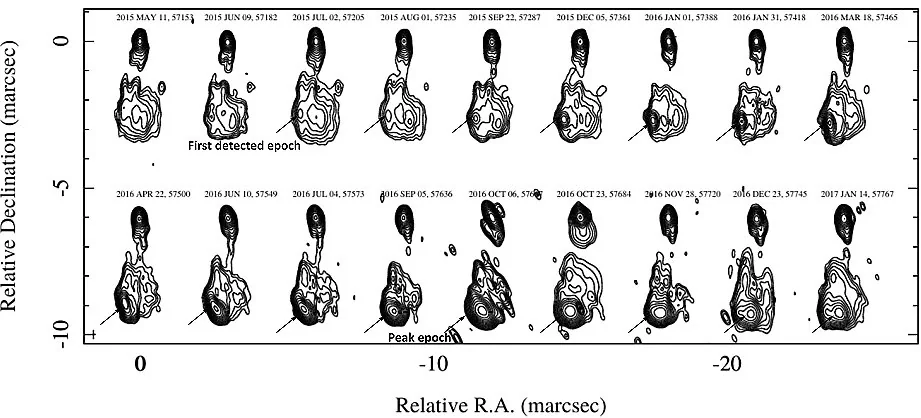
How the jet–host angle is measured: VLBI jet position angle (a) against the minor axis of the optical host in DES, DESI LS, SDSS and SkyMapper (b–e).

Black-hole jets know their host galaxy

2025 · Nature Astronomy 9 (2025) 302

Detection of an orthogonal alignment between parsec-scale AGN jets and their host galaxies

Fernández Gil, D.†, Hodgson, J. A., L'Huillier, B., Asorey, J., Saulder, C., Finner, K., et al.

Comparing VLBI jet directions with optical host-galaxy shapes for about 6,000 AGN, we detect a weak but significant alignment between the parsec-scale jet and the minor axis of its host galaxy: a link between the black hole and its host across three orders of magnitude in scale.

DOI · arXiv:2411.09099

Key papersAGN & jetsGalaxy formationVLBIWith my students

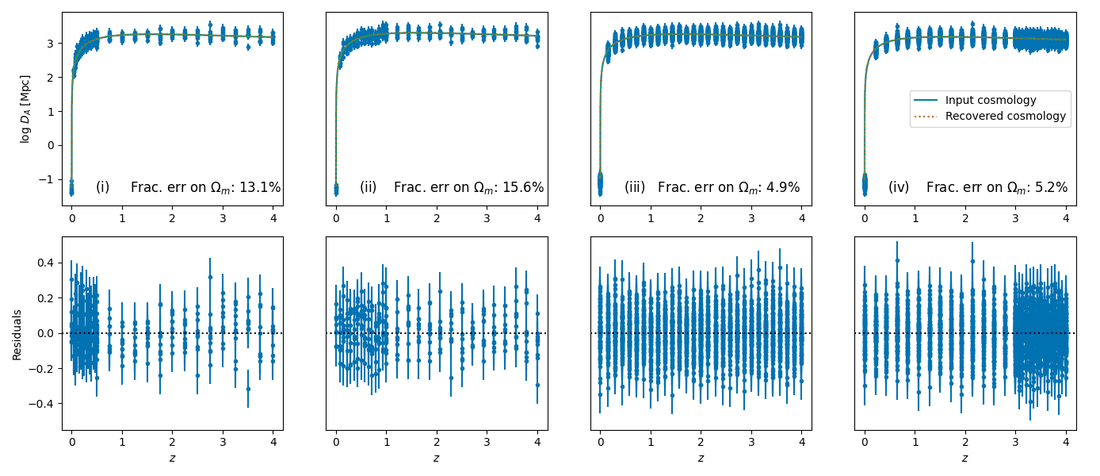
The curvature diagnostic Ok on mocks from four fiducial models: it recovers Omegak,0 = 0.1 when the input is curved.
The curvature diagnostic Ok\mathcal{O}_k on mocks from four fiducial models: it recovers Ωk,0=0.1\Omega_{k,0} = 0.1 when the input is curved.

Litmus tests for Rubin and DESI

2025 · JCAP 05 (2025) 030

Litmus tests of the flat ΛCDM model and model-independent measurement of H0rdH_0 r_\mathrm{d} with LSST and DESI

L'Huillier, B., Mitra, A., Shafieloo, A., Keeley, R. E., Koo, H.

Reconstructing the expansion history from simulated LSST supernovae and combining it with simulated DESI 5-year BAO, we forecast constraints of up to ±4% on the curvature and ±0.1 on c/(H0rd)c/(H_0 r_\mathrm{d}), without assuming any form of dark energy.

DOI · arXiv:2407.07847

Key papersCurvature & FLRWType Ia supernovaeBAOIterative smoothingFirst author

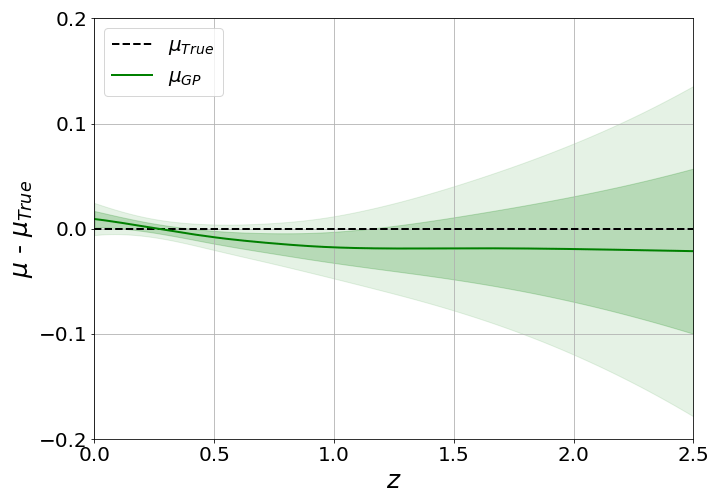
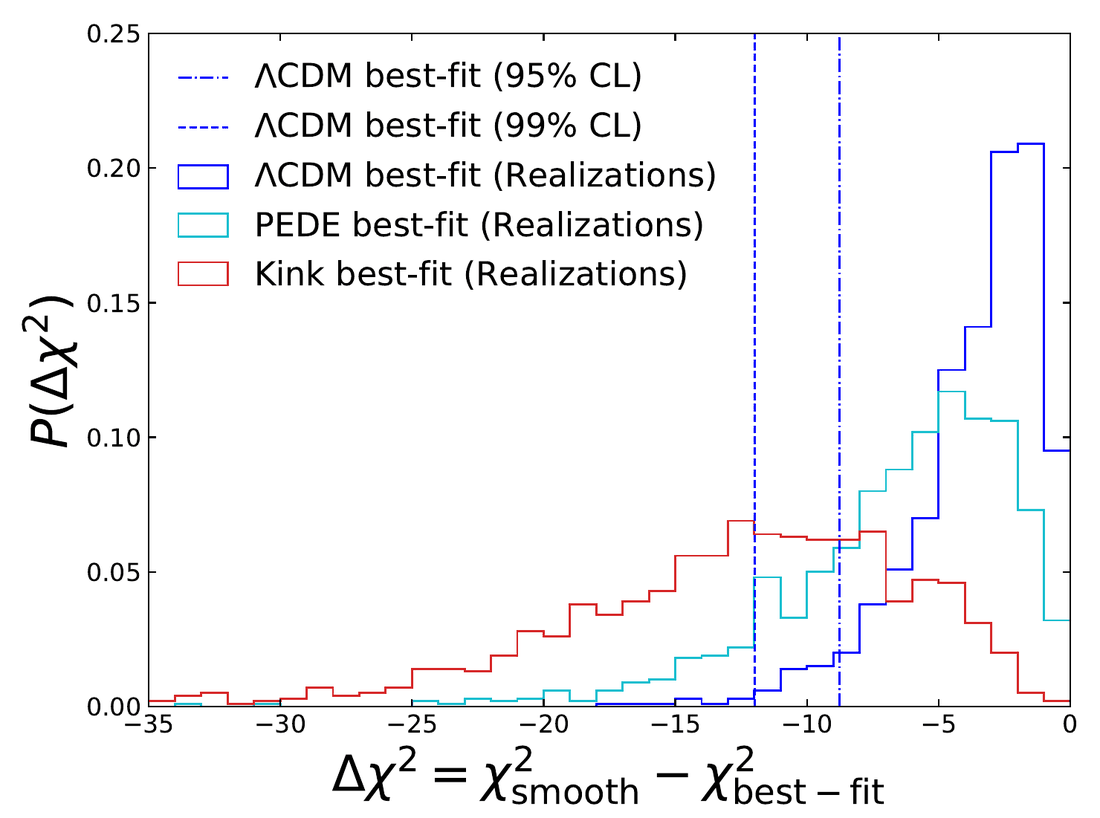
Gaussian-process reconstruction of the distance modulus relative to the truth, fully marginalised over hyperparameters and CPL parameters.

Gaussian processes, done right

2023 · JCAP 02 (2023) 014

How to use GP: effects of the mean function and hyperparameter selection on Gaussian process regression

Hwang, S.-g.†, L'Huillier, B.*, Keeley, R. E., Jee, M. J., Shafieloo, A.

The choice of mean function and hyperparameters biases Gaussian process reconstructions of supernova distances: a zero mean gives unphysical results and a best-fit ΛCDM mean biases them. Marginalising over a family of mean functions and over the hyperparameters removes the bias, whatever the kernel.

DOI · arXiv:2206.15081

Key papersType Ia supernovaeGaussian processesWith my students

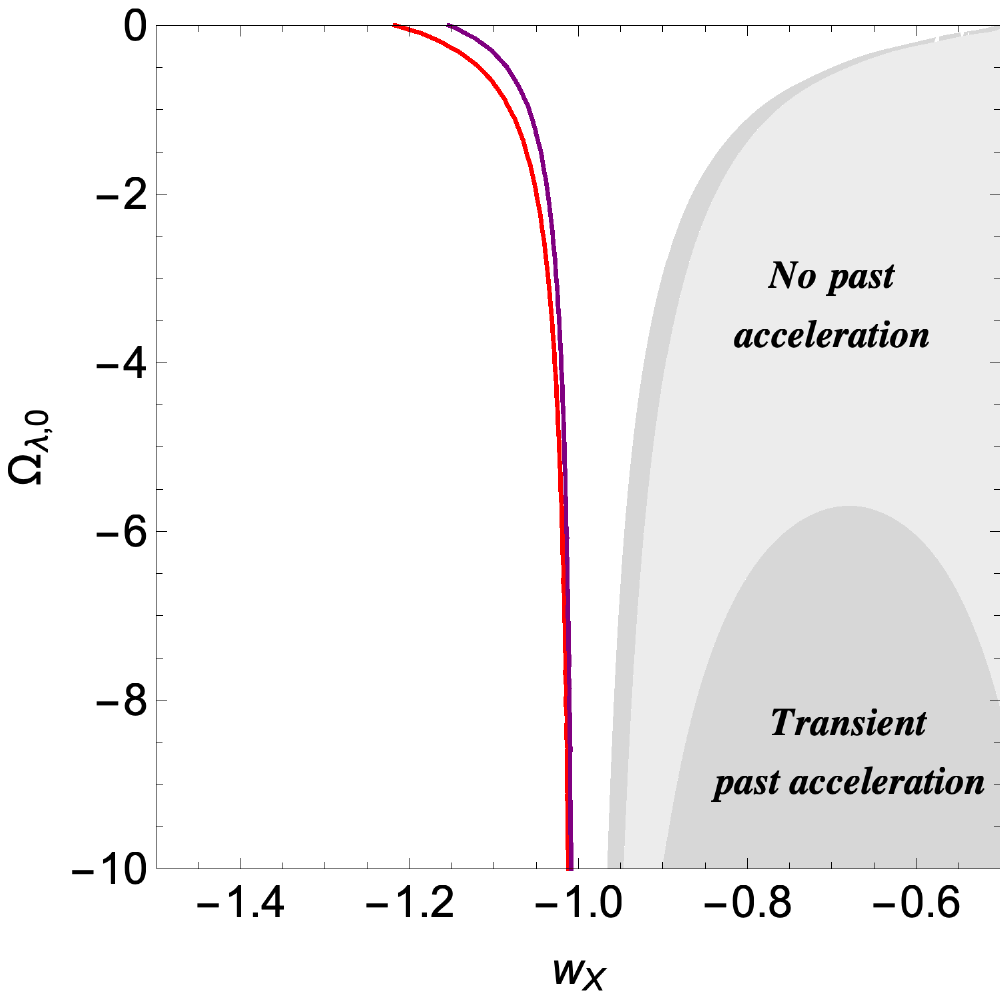
Where a universe with a negative cosmological constant still accelerates today (white), accelerated only in the past (dark grey), or never accelerated (light grey), for Omegam = 0.3.
Where a universe with a negative cosmological constant still accelerates today (white), accelerated only in the past (dark grey), or never accelerated (light grey), for Ωm=0.3\Omega_\mathrm{m} = 0.3.

2021 · Phys. Rev. D 103 (2021) 023526

Negative cosmological constant in the dark sector?

Calderón, R., Gannouji, R., L'Huillier, B.*, Polarski, D.

We study dark sectors made of a negative cosmological constant plus a late-time accelerating component. The acceleration is often transient and some models eventually contract; current data show no decisive evidence for a negative Λ\Lambda, but the best fits are phantom at z≳1z \gtrsim 1.

DOI · arXiv:2008.10237

Key papersDark energy

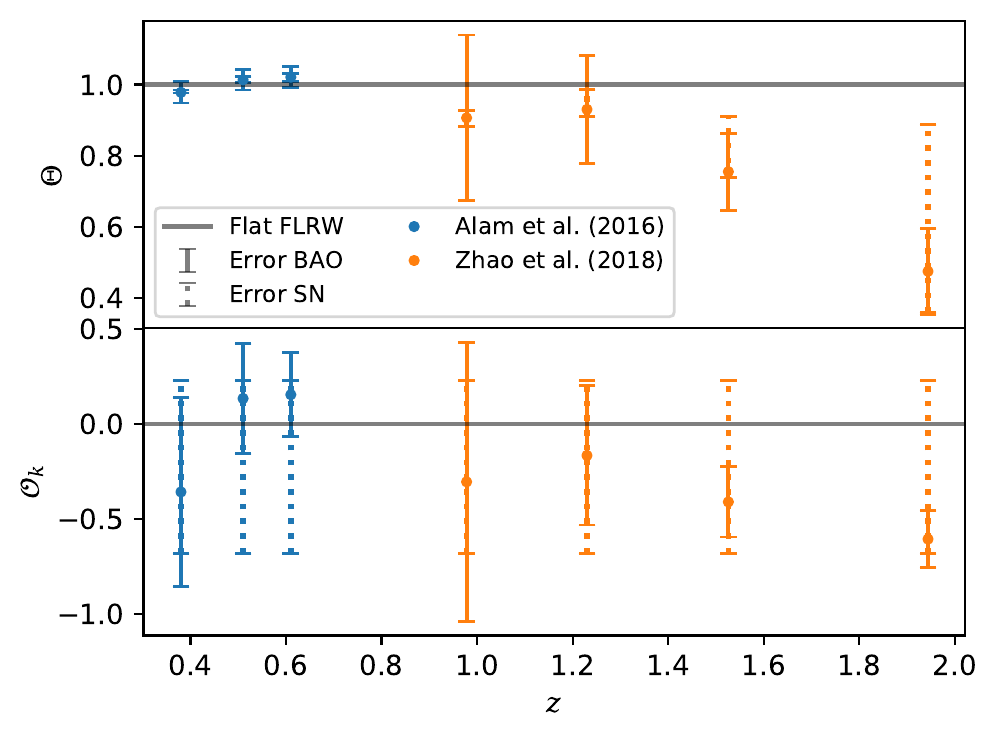
Theta(z) (top) and Ok(z) (bottom) from supernovae and BOSS/eBOSS BAO. A flat FLRW universe gives Theta = 1.
Θ(z)\Theta(z) (top) and Ok(z)\mathcal{O}_k(z) (bottom) from supernovae and BOSS/eBOSS BAO. A flat FLRW universe gives Θ=1\Theta = 1.

2018 · Phys. Rev. D 98 (2018) 083526

Falsifying ΛCDM: model-independent tests of the concordance model with eBOSS DR14Q and Pantheon

Shafieloo, A., L'Huillier, B.*, Starobinsky, A. A.

Combining model-independent expansion reconstructions from Pantheon supernovae and BAO, we test the FLRW metric and flatness, and use eBOSS DR14Q growth data to constrain Ωm\Omega_\mathrm{m}, γ\gamma and σ8\sigma_8. Everything is consistent with a flat FLRW universe, General Relativity and Λ\Lambda, with some tension at z>1z > 1.

DOI · arXiv:1804.04320

Key papersCurvature & FLRWModified gravityType Ia supernovaeBAOGrowth of structure (RSD)Iterative smoothing

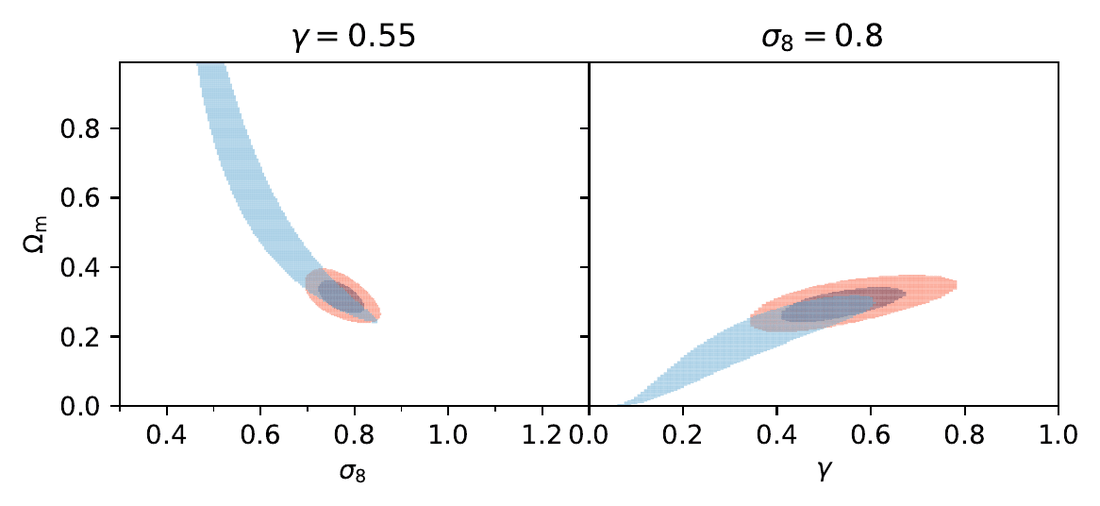
Model-independent regions allowed by growth data (blue) compared with ΛCDM (red), at fixed gamma = 0.55 (left) and fixed sigma8 = 0.8 (right).
Model-independent regions allowed by growth data (blue) compared with ΛCDM (red), at fixed γ=0.55\gamma = 0.55 (left) and fixed σ8=0.8\sigma_8 = 0.8 (right).

2018 · MNRAS 476 (2018) 3263

Model-independent cosmological constraints from growth and expansion

L'Huillier, B., Shafieloo, A., Kim, H.†

We reconstruct the expansion history from supernovae and fit growth-rate data to constrain Ωm\Omega_\mathrm{m}, the growth index γ\gamma and σ8\sigma_8 without a dark energy model. The results agree with ΛCDM in General Relativity, and requiring a positive dark energy density tightens them further.

DOI · arXiv:1712.04865

Key papersModified gravityType Ia supernovaeGrowth of structure (RSD)Iterative smoothingFirst authorWith my students

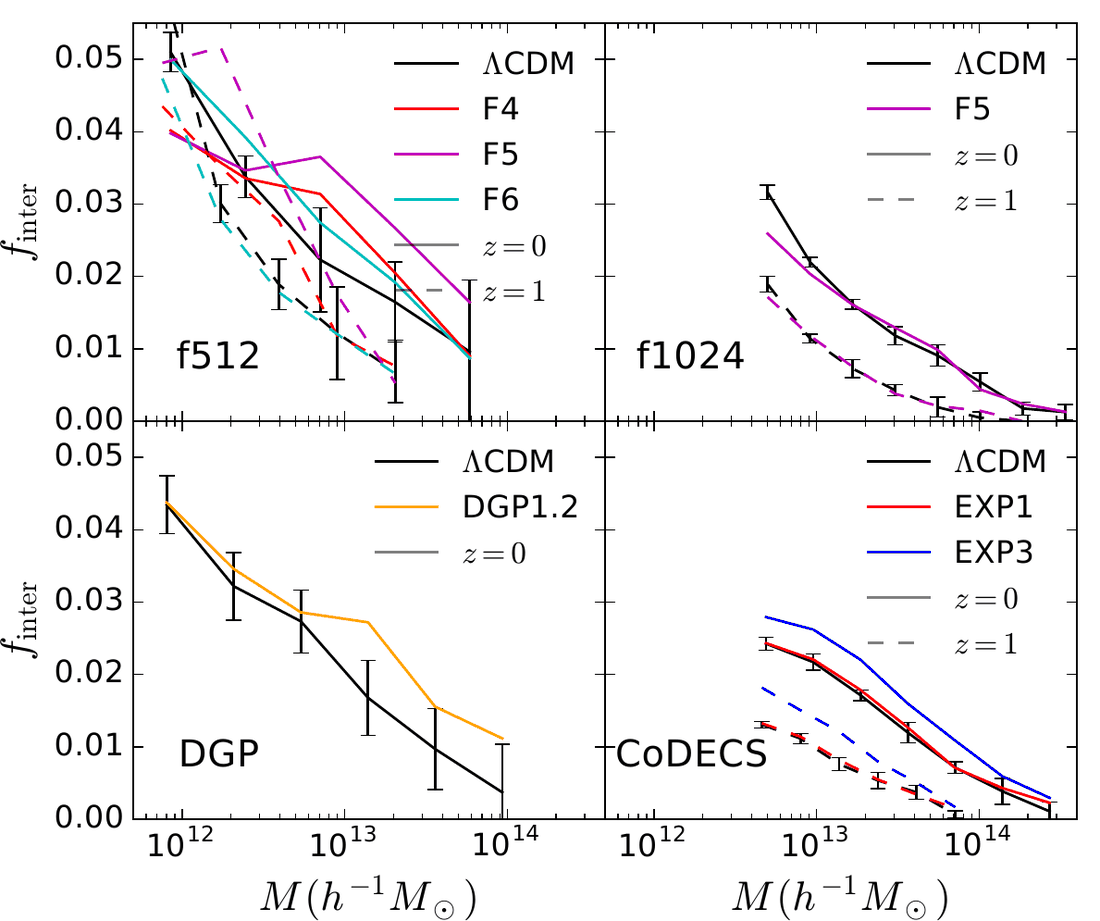
Halo interaction rate versus mass in ΛCDM and in f(R), DGP and coupled dark energy simulations.
Halo interaction rate versus mass in ΛCDM and in f(R)f(R), DGP and coupled dark energy simulations.

Haloes beyond General Relativity

2017 · MNRAS 468 (2017) 3174

Dark matter haloes in modified gravity and dark energy: interaction rate, small- and large-scale alignment

L'Huillier, B., Winther, H. A., Mota, D. F., Park, C., Kim, J.

In N-body simulations of f(R)f(R) gravity, DGP and coupled dark energy, f(R)f(R) raises halo spin and weakens the spin alignment of interacting pairs, while only strongly coupled dark energy increases the halo interaction rate and the alignment of halo shapes with the large-scale structure.

DOI · arXiv:1703.07357

Key papersModified gravityDark energyDark matter haloesSimulationsFirst author

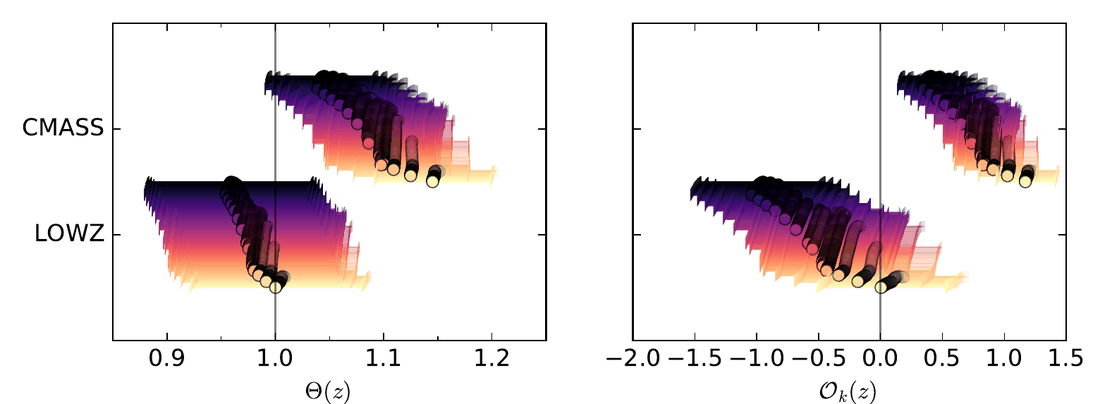
Theta(z) and the curvature diagnostic Ok(z) at the BOSS LOWZ and CMASS redshifts, one point per supernova-based reconstruction. A flat FLRW universe gives Theta = 1 and Ok = 0.
Θ(z)\Theta(z) and the curvature diagnostic Ok(z)\mathcal{O}_k(z) at the BOSS LOWZ and CMASS redshifts, one point per supernova-based reconstruction. A flat FLRW universe gives Θ=1\Theta = 1 and Ok=0\mathcal{O}_k = 0.

Testing ΛCDM without assuming it

2017 · JCAP 01 (2017) 015

Model-independent test of the FLRW metric, the flatness of the Universe, and non-local measurement of H0rdH_0 r_\mathrm{d}

L'Huillier, B., Shafieloo, A.

Combining BOSS DR12 BAO with JLA supernovae, we measure H0rdH_0 r_\mathrm{d} without assuming a cosmological model and introduce the Θ(z)\Theta(z) diagnostic of the flat-FLRW metric. The results are consistent with a flat FLRW universe within 2σ2\sigma.

DOI · arXiv:1606.06832

Key papersCurvature & FLRWType Ia supernovaeBAOIterative smoothingFirst author

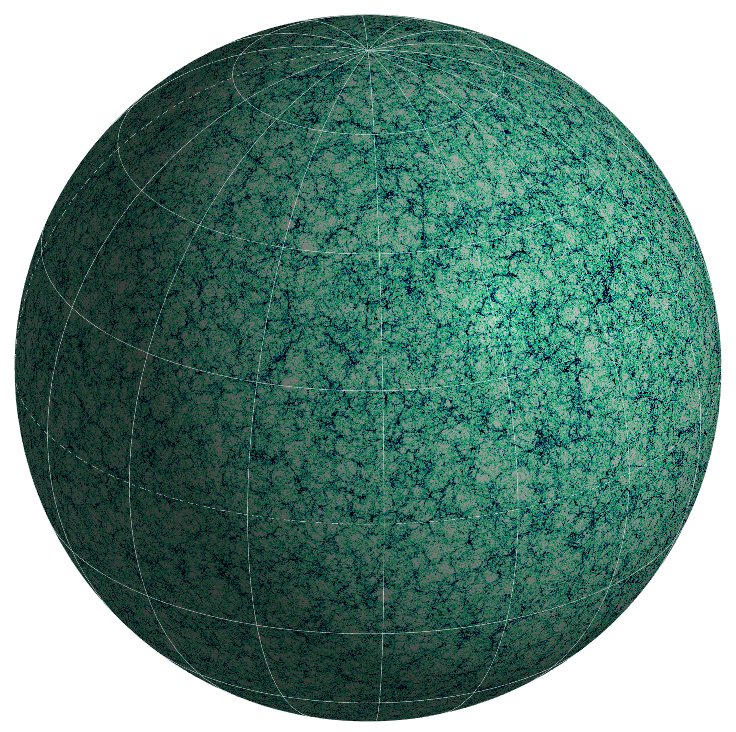
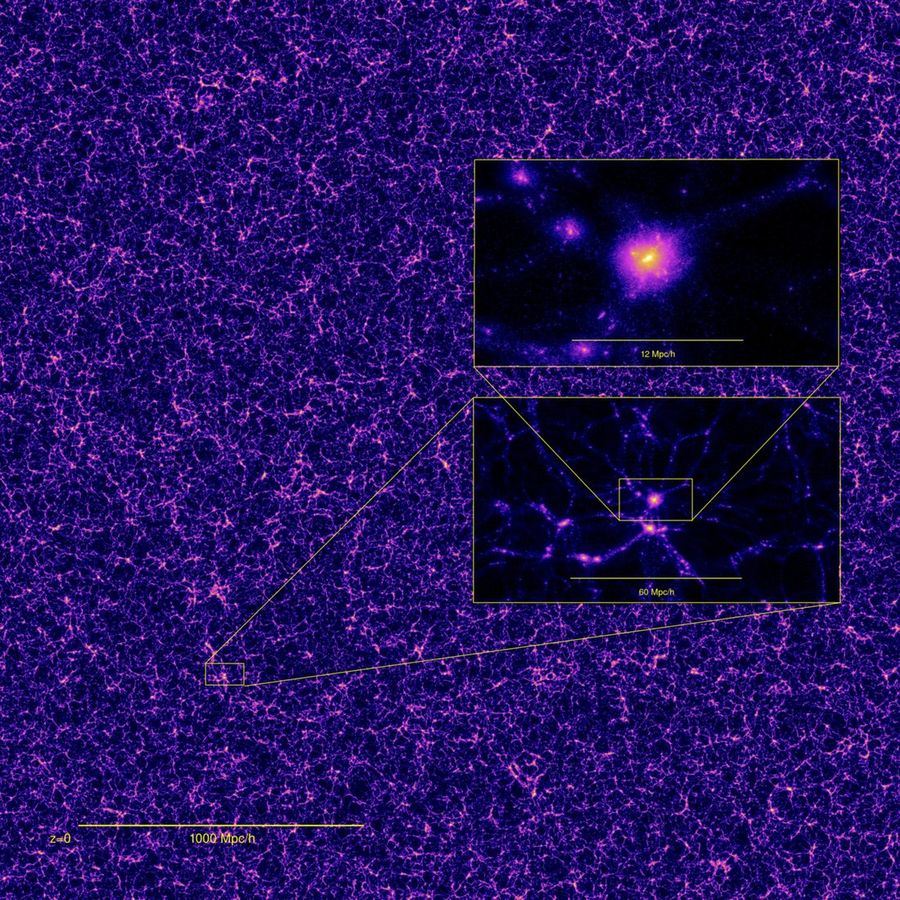
A 7h-1Mpc-thick slice through Horizon Run 4 at z = 0, with two successive zooms onto a galaxy cluster.
A 7 h−1 Mpc7\,h^{-1}\,\mathrm{Mpc}-thick slice through Horizon Run 4 at z=0z = 0, with two successive zooms onto a galaxy cluster.

2015 · J. Korean Astron. Soc. 48 (2015) 213

Horizon Run 4 simulation: coupled evolution of galaxies and large-scale structures of the Universe

Kim, J., Park, C., L'Huillier, B., Hong, S. E.

Horizon Run 4 follows 630036300^3 particles in a 3150 h−1 Mpc3150\,h^{-1}\,\mathrm{Mpc} box, with halo merger trees down to 2.7×10¹¹ h−1 M⊙2.7\times10^{11}\,h^{-1}\,M_\odot. The halo mass function departs from universality and evolves with redshift, and the BAO peak in mock galaxy correlations broadens and shifts. The data are public.

DOI · arXiv:1508.05107

Key papersLarge-scale structureDark matter haloesSimulations

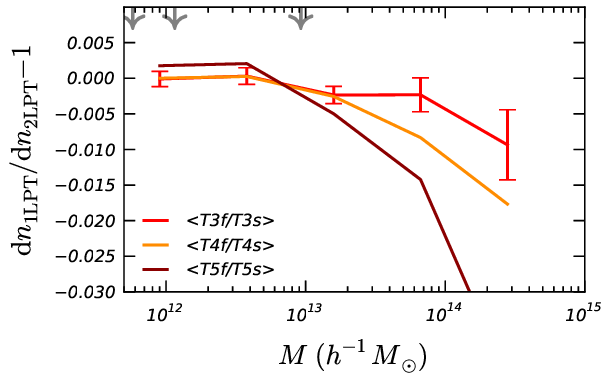
Effect of the order of Lagrangian perturbation theory (1LPT vs 2LPT) in the initial conditions on the halo mass function.

2014 · New Astron. 30 (2014) 79

Effects of the initial conditions on cosmological N-body simulations

L'Huillier, B., Park, C., Kim, J.

We test how the pre-initial configuration, the order of Lagrangian perturbation theory and the starting redshift affect N-body results. Glass and grid give similar results at z≲2z \lesssim 2, while first-order LPT underestimates massive haloes by about 2% and small-scale power by 6%.

DOI · arXiv:1401.6180

Key papersSimulationsFirst author

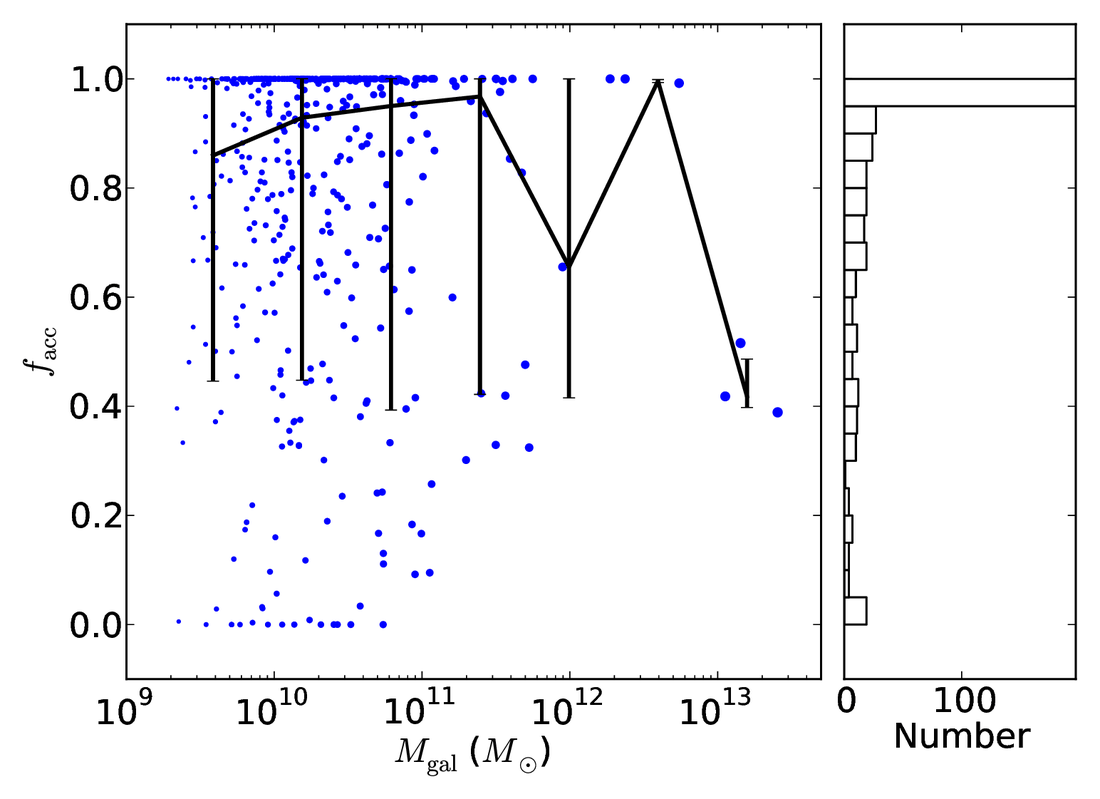
Fraction of stellar mass gained through smooth accretion rather than mergers, versus galaxy mass. The mean is 77%.

2012 · A&A 544 (2012) A68

Mass assembly of galaxies: smooth accretion versus mergers

L'Huillier, B., Combes, F., Semelin, B.

Multi-zoom cosmological simulations show that galaxies grow mostly by smooth accretion, which brings on average 77% of their mass, while mergers bring 23%. Only the most massive galaxies grow significantly through mergers.

DOI · arXiv:1108.4247

Key papersGalaxy formationSimulationsFirst author

Next five years

Gravitational waves as an independent check. Merging black holes and neutron stars give distances through an entirely different physical principle. Adding them to the reconstruction gives a cross-check of the expansion history that does not rely on supernovae or galaxy clustering.

Model-independent tests at Stage-IV scale. DESI, the Vera C. Rubin Observatory and Euclid will increase data volumes by orders of magnitude. With students in my group, I am exploring machine learning and optimal transport to scale non-parametric reconstructions to these surveys.

Galaxy clusters and lensing. Non-parametric estimates of the baryon gas fraction and of cosmological bias from clusters, and reconstructions of the matter distribution from CMB lensing and 3×2pt data.

France–Korea collaboration. Building on the PHC STAR partnership with the Institut d'Astrophysique Spatiale (CNRS / Université Paris-Saclay) and on joint work with KASI, combining early- and late-Universe probes. I will be a visiting professor at IAS in January–February 2027.

Funding & collaborations

Funding

  • 2026–2028 — Co-investigator, PHC STAR France–Korea (Campus France / NRF): Dark matter properties from galactic to cosmic large-scale structures
  • 2023–2025 — Principal investigator (Korean side), PHC STAR France–Korea (Campus France / NRF), with the Institut d’Astrophysique Spatiale: Joint cosmological constraints from the early and late Universe
  • 2022–2025 — Principal investigator, National Research Foundation of Korea: Testing General Relativity with upcoming surveys
  • 2019–2022 — Principal investigator, National Research Foundation of Korea: Testing cosmological models with the large-scale structure

Collaborations

  • Since 2025 — Nancy Grace Roman Space Telescope
  • 2016–2022 — Dark Energy Spectroscopic Instrument (DESI)

Full list

My complete and up-to-date list of publications can be found on: